
THE FINDING MARY SMITH MULTIMEDIA COMPANION
SEE & HEAR
THE STORY
The songs, performances, television footage and rare recordings mentioned in Finding Mary Smith—collected here so you can experience pieces of the story for yourself.
You read about them. Now press play.
FROM THE PAGES OF FINDING MARY SMITH
Follow the story through the actual songs, performances and footage Al discovers along the way.
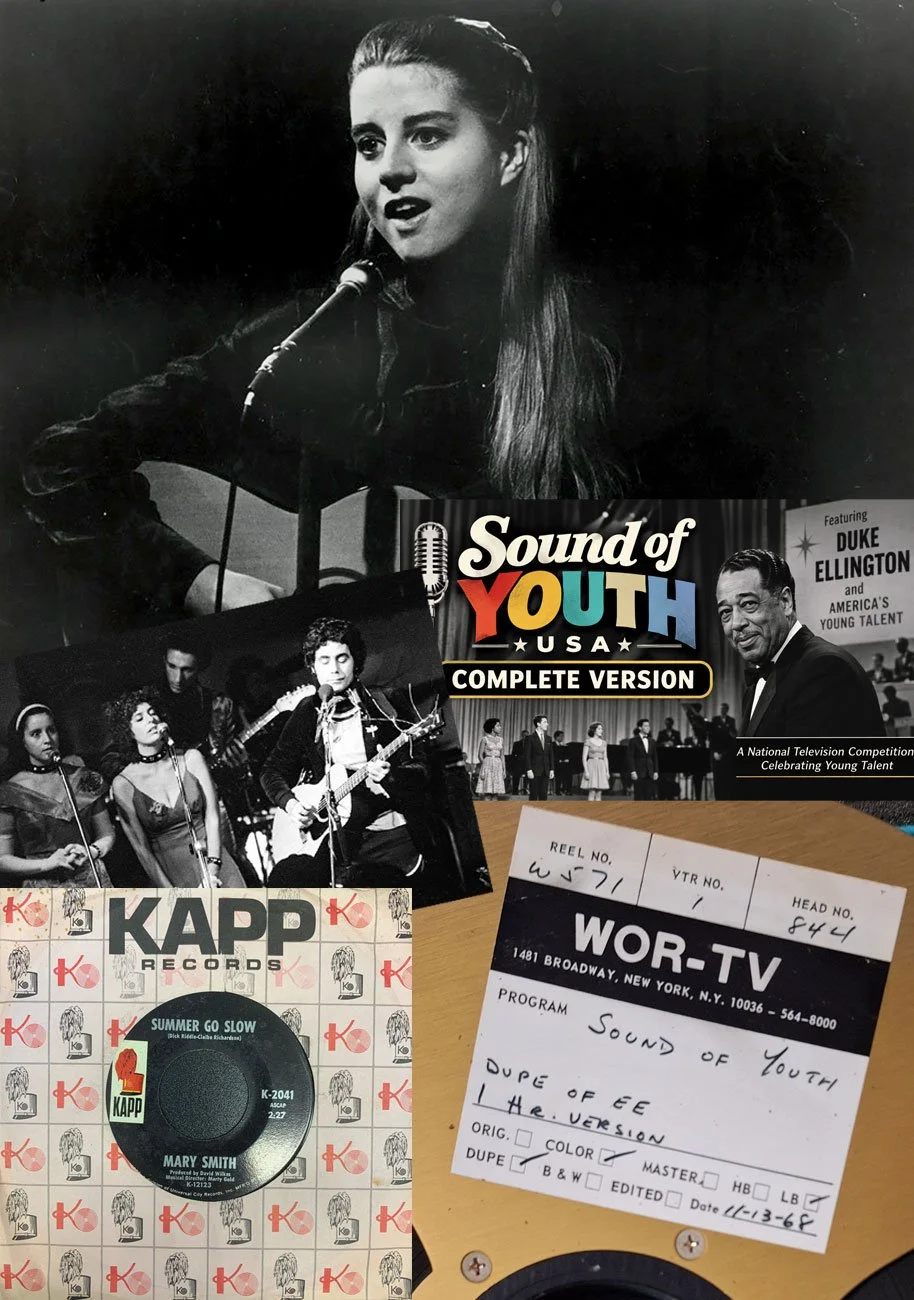
MARY SMITH • 1969
“Rap, Run It On Down”
The First Time I Heard My Mother's Voice
My son Nick was the one who found it—a YouTube video showing nothing more than a 45 RPM record spinning on the screen. Then Mary started singing.
Less than a year earlier, I hadn't known I was adopted. Now I was standing in my office with my wife and son, listening to the voice of the woman who had given birth to me more than fifty years earlier.
Theresa put her hand on my back and said, “Wow. That's the first time you're hearing your birth mother's voice.”
She was right.
ABOUT THE SONG
“Rap, Run It On Down” had a life before Mary recorded it. Written by Quincy Jones, Dick Cooper and Ernie Shelby, the song originally appeared on Jones’ soundtrack for the 1969 Sidney Poitier film The Lost Man, performed by Nate Turner, Venetta Fields and The Mirettes. Mary’s version was released later that year by Kapp Records as the B-side of her first single, “Summer Go Slow.” Not a bad pedigree for the first recording I ever heard of my birth mother.
MARY SMITH • 1969
“Summer Go Slow”
The Other Side of the Record
“Rap, Run It On Down” was the first recording I found of Mary—but it wasn’t actually her first single. It was the B-side. The A-side was a song called “Summer Go Slow,” released by Kapp Records in 1969, just months before I was born.
There was only one problem.
I couldn’t find it anywhere.
YouTube had given me Mary’s voice for the first time, but “Summer Go Slow” sent me somewhere considerably more old-school: into the world of record collectors. Eventually, I tracked down an original copy of the 45 on Discogs.
Which was great.
Except I didn’t own a record player.
ABOUT THE SONG
“Summer Go Slow” was written by Claibe Richardson and Dick Riddle and produced by David Wilkes. Mary recorded it during her Kapp Records session over a pre-recorded backing track rather than with her own band. As Mary later told me, it wasn’t really her style.
And there’s an even better piece of music history behind it: the song Mary had expected to record was “Long Long Time,” written by her friend Gary White. That song would instead become closely associated with Linda Ronstadt, whose 1970 recording earned her a Grammy nomination.
SOUND OF YOUTH, U.S.A. • 1968
The Show I Was
Never Supposed to Find
Before American Idol, There Was Sound of Youth
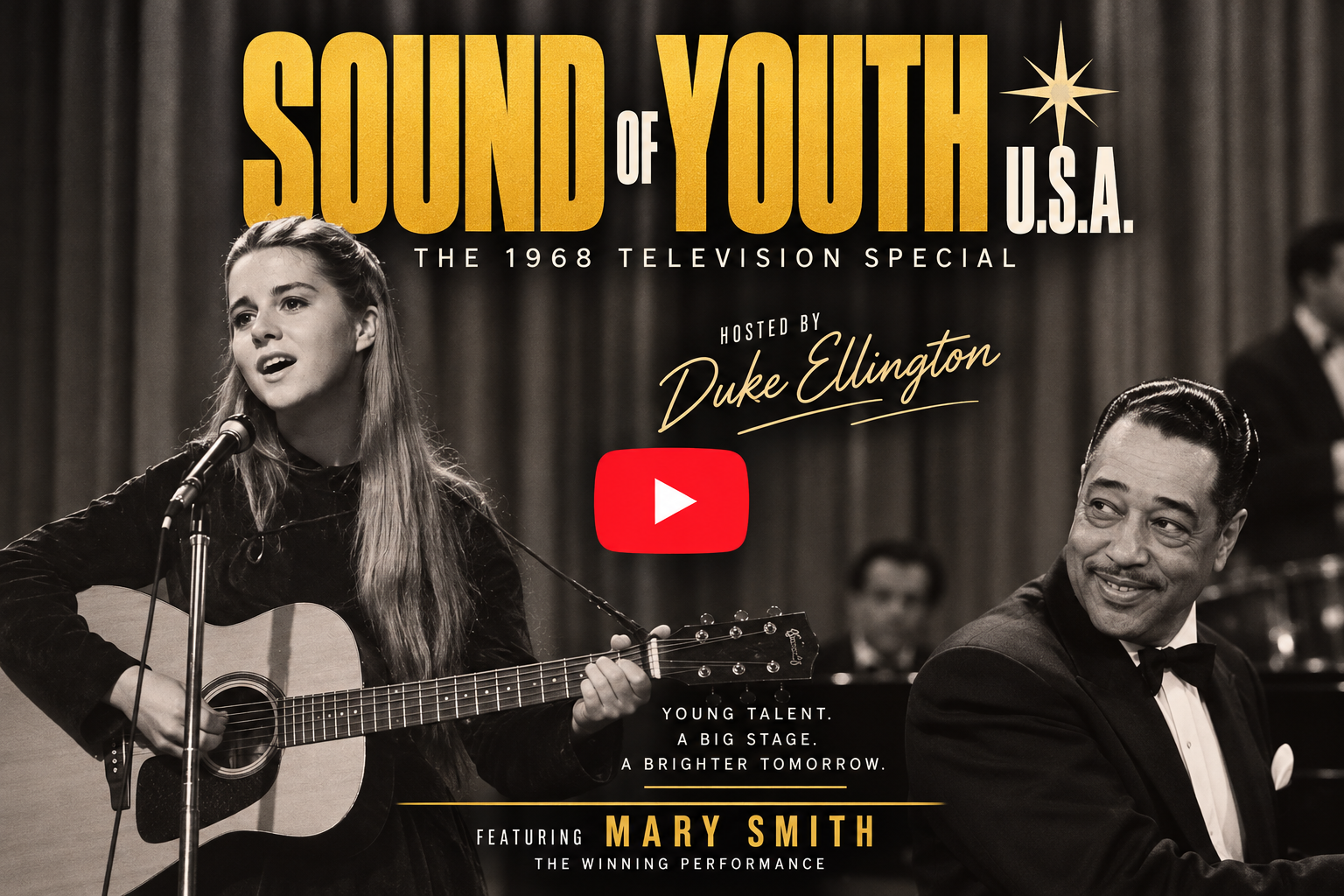
In 1968, eighteen-year-old Mary Smith entered a talent competition called Sound of Youth, U.S.A. She kept winning—local, city, state and regional competitions—until she found herself in New York City for the national finals.
The television special was hosted by Duke Ellington.
And Mary won the whole damn thing.
More than fifty years later, that obscure competition would become one of the most important clues in my search. Suddenly “Mary Smith” wasn't just one of the most common names imaginable. I had Mary Smith. Singer. Sound of Youth. 1968.
And the internet started giving up its secrets.
ABOUT THE VIDEO
There was just one thing I couldn't find: the show itself.
It had aired once in 1968, long before anyone could record television at home. I contacted archives, broadcasters, people connected with Duke Ellington and anyone else I thought might possibly know where a copy survived.
The answer was essentially the same everywhere:
It's probably gone.
It wasn't.
After one final trail led me to the American Heritage Center at the University of Wyoming, a reel turned up marked Sound of Youth. It was more than half a century old, on an obsolete videotape format, and nobody knew whether it would even play.
I had it digitized.
The first face that appeared on the screen was Mary.
And after spending two years trying to find my mother—and another search trying to find this seemingly lost piece of her past—I finally had the ending to Finding Mary Smith.
THE SONG THAT ALMOST WAS • 1970
“Long Long Time”
The Song Mary Was Supposed to Record
When Mary went into the studio for Kapp Records, “Summer Go Slow” wasn’t the song she thought she was going to record.
That song was “Long Long Time,” written by her friend, songwriter Gary White.
Mary knew the song. She knew Gary. And for a brief moment, it looked as though “Long Long Time” might become her record.
It didn’t.
Instead, Mary recorded “Summer Go Slow” and “Rap, Run It On Down.” “Long Long Time” found its way to another young singer whose career was just beginning to take off.
Her name was Linda Ronstadt.
ABOUT THE SONG
Linda Ronstadt released “Long Long Time” in 1970, and the recording earned her a Grammy nomination for Best Contemporary Female Vocal Performance.
More than fifty years later, the song found an entirely new audience when it was used prominently in HBO’s The Last of Us.
But whenever I hear it, I can't help wondering about a different version—one that was never recorded.
What would “Long Long Time” have sounded like if Mary had sung it?
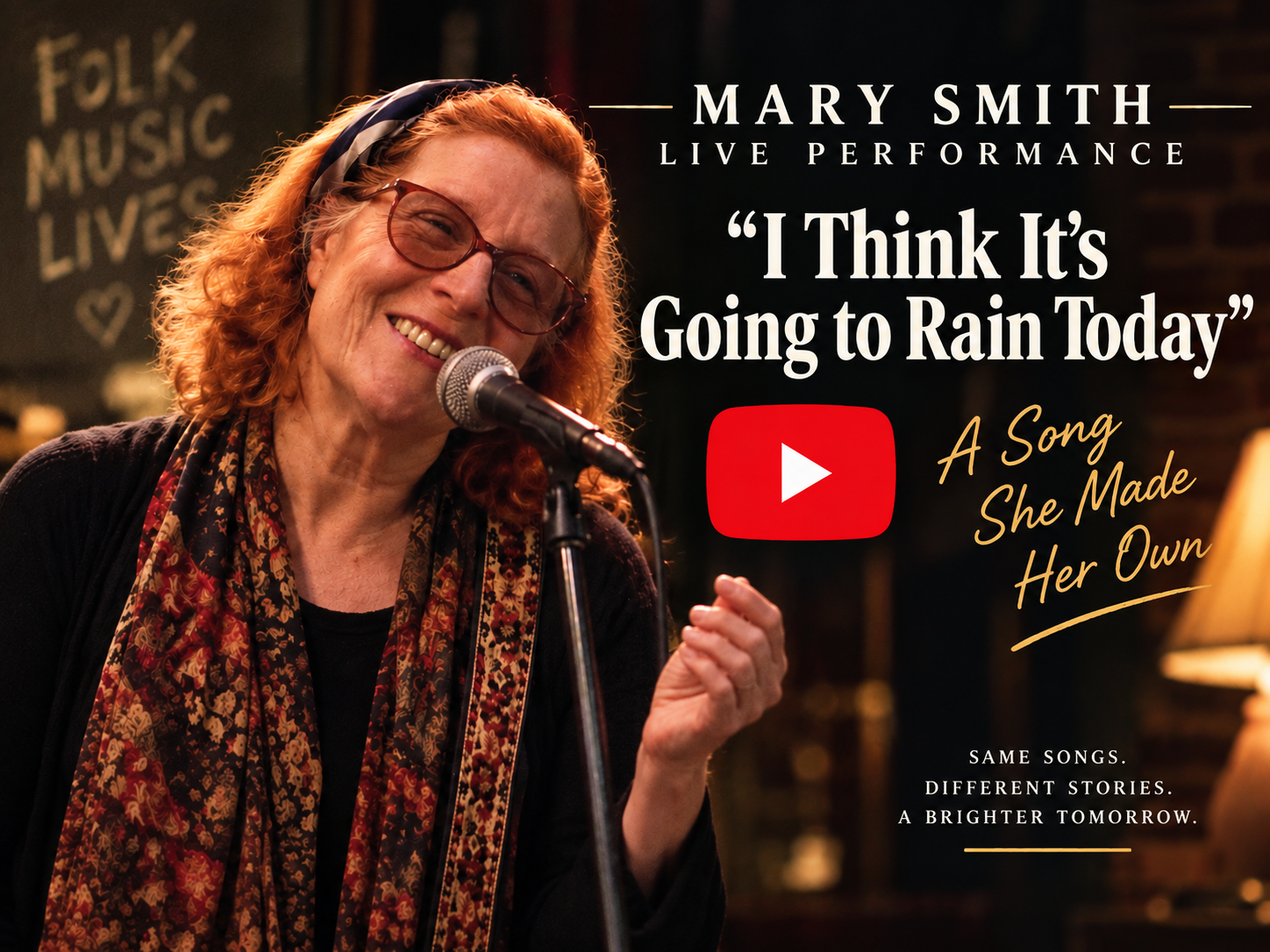
MARY (SMITH) HUGHES LIVE • 2012
“I Think It’s Going to Rain Today”
When Mary and I were talking about her years performing, she told me about opening for Randy Newman in September 1970. She remembered his song “I Think It’s Going to Rain Today” in particular. It was one of her favorites, and she eventually made it part of her own acoustic sets.
At the time I wrote Finding Mary Smith, I knew plenty of people had recorded the song—Nina Simone, Dusty Springfield, Bette Midler, Peter Gabriel and others.
But there was only one version I really wanted to hear.
Mary’s.
In the book, I wrote that it was the unrecorded version I wished I had most.
Turns out I was wrong about the “unrecorded” part.
ABOUT THE VIDEO
Since finishing the book, another little piece of Mary’s musical past has surfaced: a video of her actually singing “I Think It’s Going to Rain Today.”
Which means this page can now do something the book couldn't.
Recorded around 2012, you can see the version I didn’t know existed.
GREGORY FLEEMAN & THE FLEEWOMEN
The Fleewoman Years
Another Piece of Mary's Musical Life
Long before I knew any of this, Mary had another wonderfully strange entry on her musical résumé: Fleewoman.
She had performed with writer, musician and entertainer Gregory Fleeman and his group, the FleeWomen. Decades later, when Fleeman released The Right Tool for the Job, Mary returned to sing backing vocals on the record.
Which means that somewhere in the mix, more than thirty years after her Kapp Records single and Electric Lady demos, there she was again.
Mary's voice.
ABOUT THE RECORDING
The Right Tool for the Job was released in 2005 under the name Gregory Fleeman & The FleeWomen.
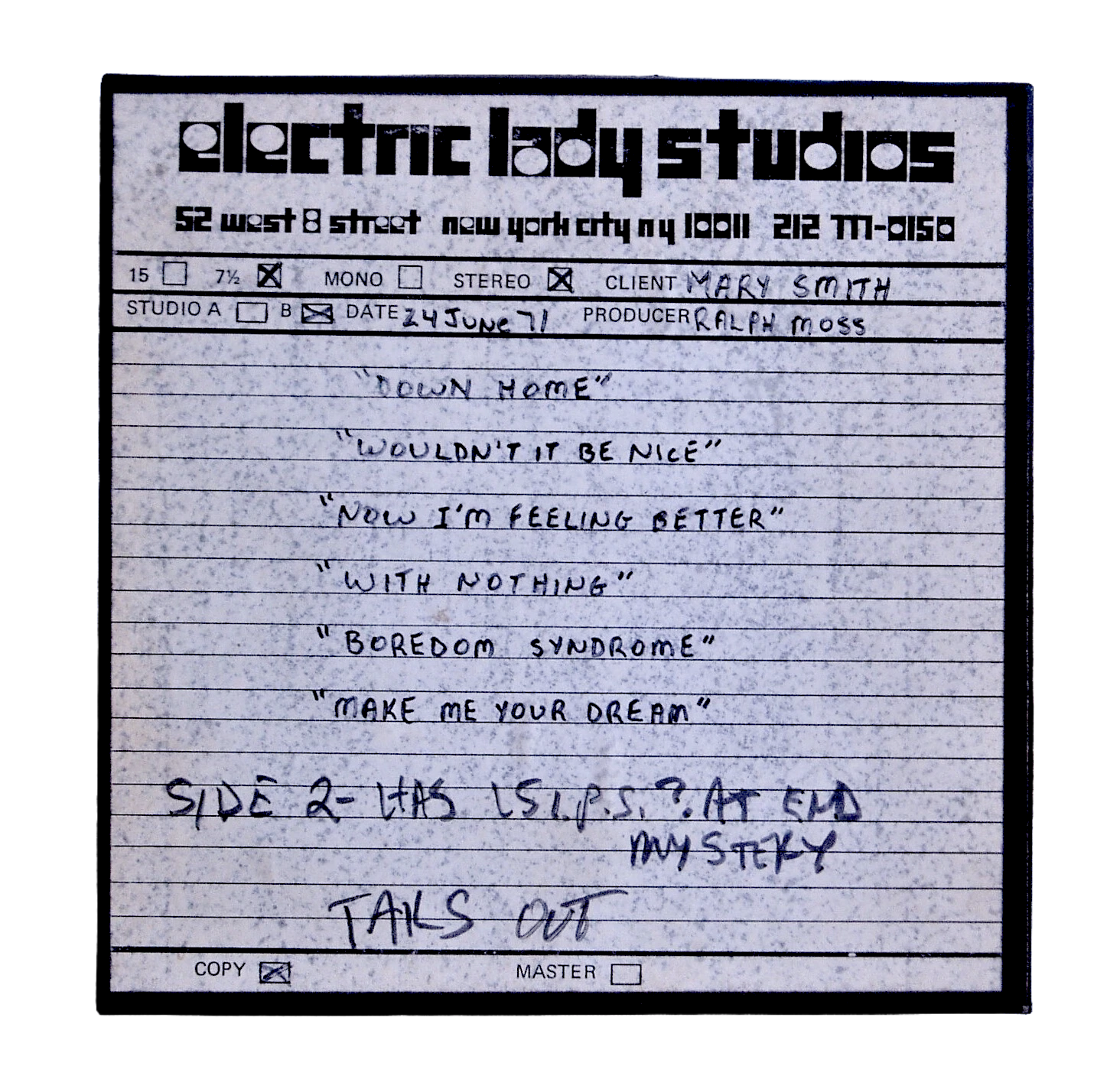
SELECTED FROM THE ORIGINAL 1971 DEMO REEL
ELECTRIC LADY STUDIOS • JUNE 24, 1971
The Demo Reel
Six Songs. One Guitar. Mary.
By this point, I had gotten pretty good at finding things that weren't supposed to be easy to find.
Records. Photographs. Newspaper clippings. Long-forgotten television shows.
Then I found this.
On June 24, 1971, Mary walked into Electric Lady Studios in Greenwich Village—the recording studio Jimi Hendrix had built less than a year earlier—and recorded a six-song demo.
Just Mary and her guitar.
The tape had survived for more than fifty years. And somehow, eventually, it found its way to me.
ABOUT THE RECORDING
Mary was at Electric Lady recording backing vocals connected with songwriter Barry Mann when she also recorded this six-song demo, produced by Ralph Moss.
For decades, the quarter-inch reel sat quietly as a piece of recording-studio history.
I bought it on eBay.
And unlike some of the other artifacts in this story, this one didn't just give me another photograph, another name or another clue.
It gave me six more songs in my mother's voice.
It isn't a recreation. It isn't a photograph of something sitting in an archive somewhere. This is the actual tape box, dated June 24, 1971, with Mary's name and the six songs written across the front.
More than fifty years later, I found the tape.
And now you can hear it.
THE STORY CONTINUES
You’ve Seen the Clues.
Now Read the Story.
The records, the television footage, the songs and the forgotten tapes were all pieces of a much bigger mystery.
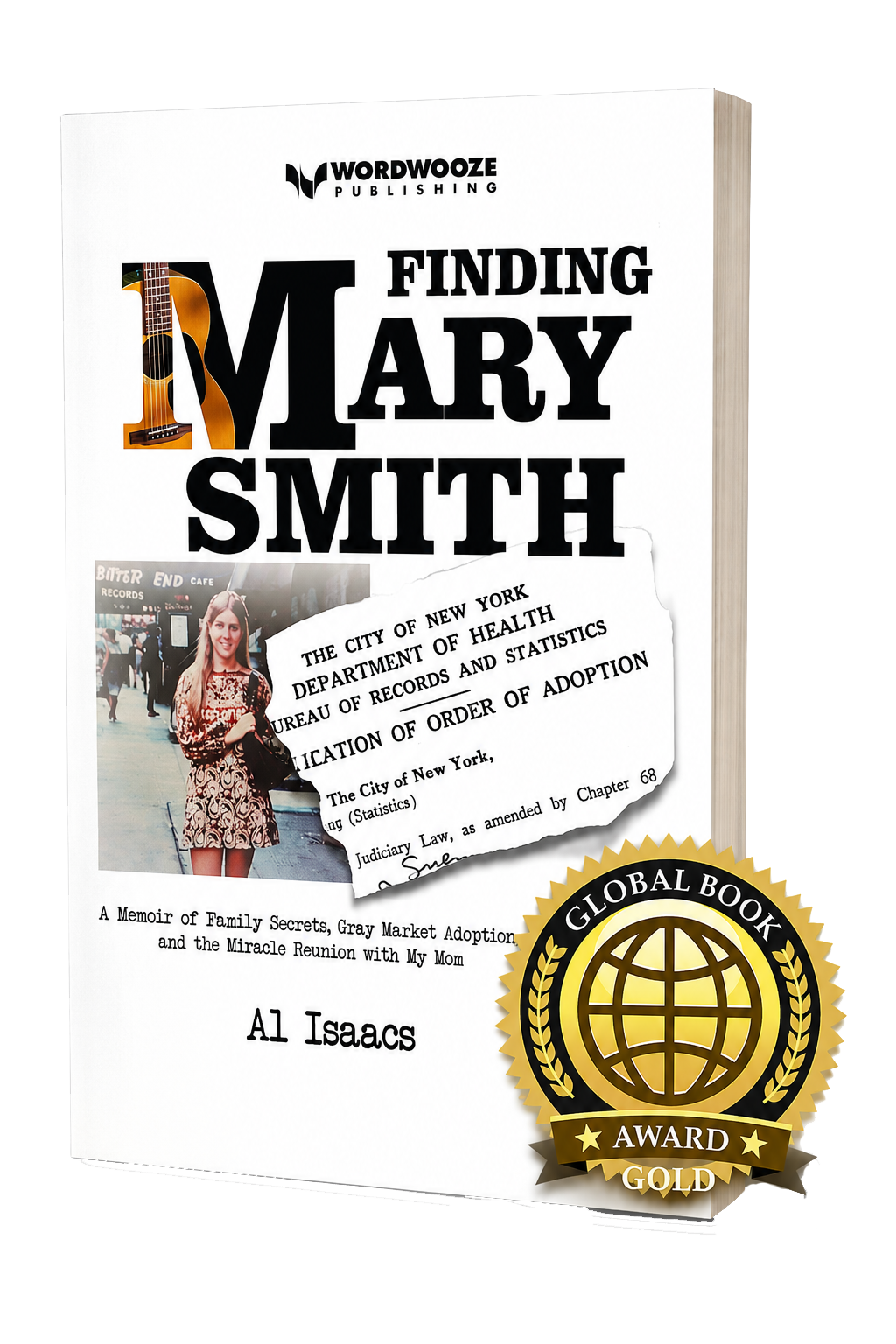
Finding Mary Smith is the story of what happened when, at 52 years old, I discovered the truth about where I came from—and went looking for the woman whose voice you've been hearing on this page.
What began with a family secret became a search through DNA, old newspapers, forgotten recordings, impossible coincidences and more than fifty years of history.
And somehow, it led me to Mary.
If you've enjoyed discovering these pieces of the story, the rest is waiting for you in the book.
Paperback • eBook • Audiobook — Narrated by Al Isaacs